
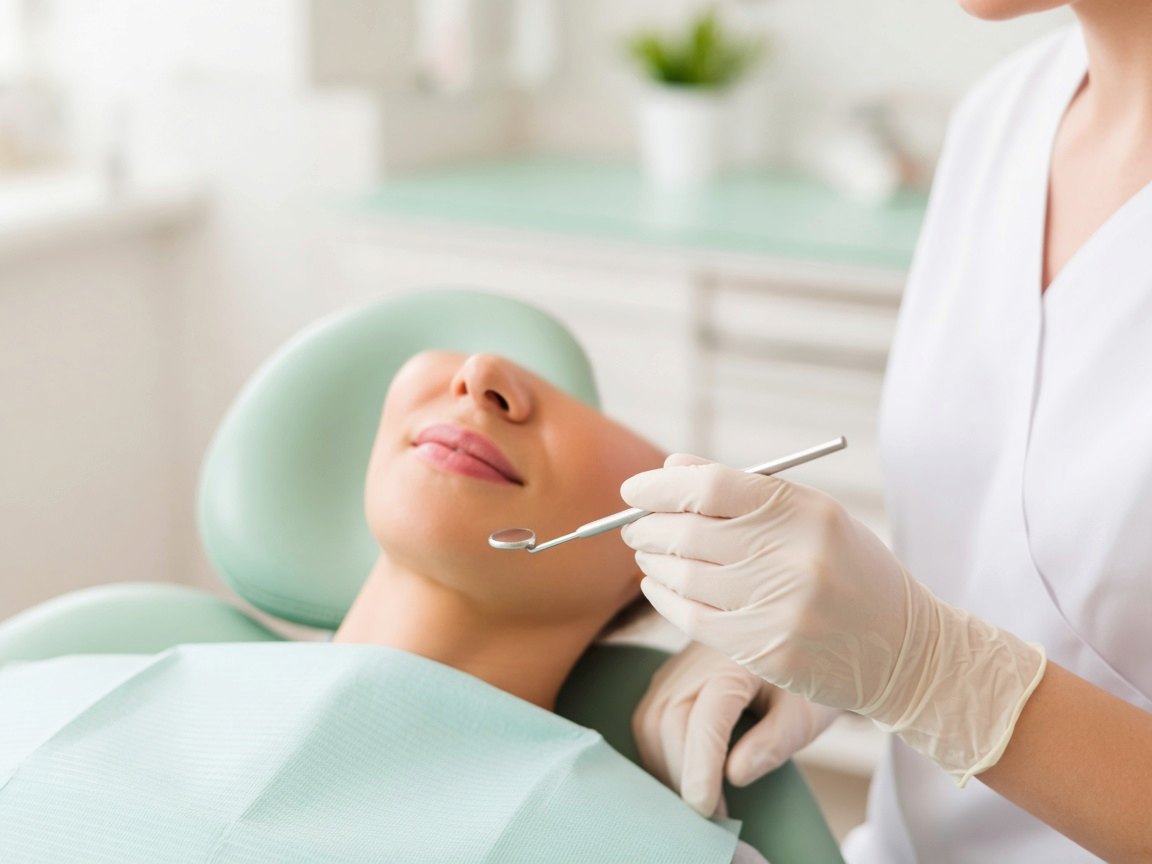
What happens at a hygiene appointment?
A dental hygienist removes plaque and hardened tartar from your teeth, including areas your toothbrush cannot reach, then polishes the surface to lift surface staining. This is often called a scale and polish.
The visit is also a check on your gums. Bleeding or swollen gums are early signs of gum disease, which is easiest to treat when it is found early. Healthy gums are also the foundation for implants, veneers and whitening.
A hygiene visit is a good idea if
- Your gums bleed when you brush or floss.
- You have noticed staining or build-up on your teeth.
- You have persistent bad breath.
- You are planning cosmetic treatment such as whitening or veneers.
What to expect, step by step
Check
We look at your teeth and gums and ask about your routine.
Scale
Plaque and tartar are removed with gentle instruments.
Polish
Your teeth are polished to remove surface stain.
Advice
You get practical advice on brushing, cleaning between teeth and how often to return.
Good to know
Prevention
Regular hygiene visits are far simpler than treating advanced gum disease.
Sensitivity
If your teeth are sensitive, tell your hygienist and they will adjust the way they work.
Appointments are at KBM Dental in Rathfarnham, Dublin 14. Patients also visit from Rathmines, Donnybrook, Ballsbridge and the wider South Dublin area. Treatment starts with a consultation, so the plan and the cost are clear before you decide.
Enquire about Dental Hygiene